
Tourmaline is one of the most captivating gemstones on the market, beloved for its extraordinary range of colors and impressive durability. Whether you’re drawn to deep greens, vibrant pinks, or oceanic blues, tourmaline offers something for everyone. It’s not just a pretty face either—this gem is known for being tough enough for everyday wear, making it a favorite among active individuals who want to incorporate beauty into their daily life without worry. In this blog, we’ll explore what makes tourmaline special, its wide spectrum of colors, and why it’s a smart choice for those who live life on the go.
What Is Tourmaline?
Tourmaline is a semi-precious gemstone made up of a complex family of boron silicate minerals. Because of its intricate chemical composition, tourmaline forms in a variety of colors and sometimes even features multiple hues in a single stone. The name “tourmaline” comes from the Sinhalese word “turmali,” which was a term used in Sri Lanka for mixed gemstones. This is fitting, given tourmaline’s reputation as a gem of many colors.
Tourmaline is found in numerous locations around the world, including Brazil, Afghanistan, Madagascar, Nigeria, Mozambique, and the United States (notably in California and Maine).
A Kaleidoscope of Colors: Tourmaline’s Stunning Color Range
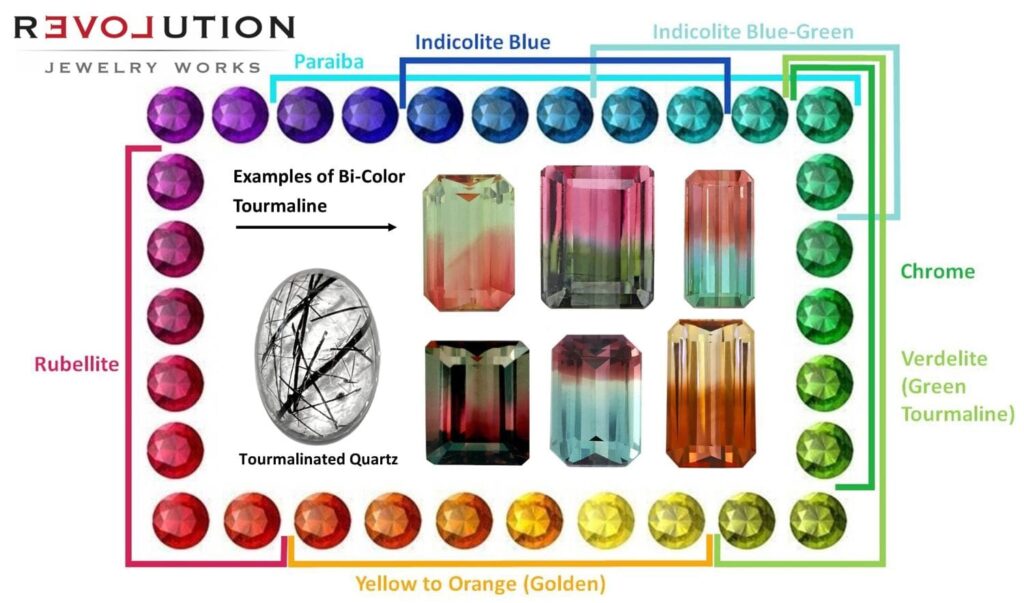
Tourmaline’s color diversity is unmatched in the gemstone world, thanks to its complex chemical composition. It comes in nearly every color imaginable—and sometimes several in a single stone.
Popular Tourmaline Color Varieties:
1. Green Tourmaline (Verdelite) – This variety spans from pale mint to deep forest green and is often confused with emerald. It’s vibrant, affordable, and widely available.
2. Pink and Red Tourmaline (Rubellite) – From delicate blush to vivid magenta, pink tourmaline is cherished for its romantic and feminine appeal. It is also one of October’s birthstones.
3. Blue Tourmaline (Indicolite) – Blue tourmaline is rare and ranges from teal to rich sapphire-like hues. Its cool tones are soothing and elegant.
4. Paraiba Tourmaline – Among the rarest and most valuable, Paraiba tourmalines are known for their neon blue and green shades, due to the presence of copper. These gems often glow from within.
5. Watermelon Tourmaline – This bi-color gem features pink centers surrounded by green edges, resembling the inside of a watermelon. It’s a whimsical and highly sought-after variety.
6. Black Tourmaline (Schorl) – Known for its grounding and protective energy, black tourmaline is opaque and glossy. It’s also very durable and popular in metaphysical jewelry.
7. Yellow, Brown, and Colorless Tourmaline – While not as common as the vibrant greens and pinks, tourmaline also appears in earthy browns, warm yellows, and even clear, diamond-like forms.
8. Multi-colored Tourmaline – Some tourmaline crystals display zones of different colors, often cut to highlight their unique patterning. These are often collector’s pieces.
With such a range, tourmaline offers a tailored aesthetic for just about any style—from bold and edgy to soft and elegant.
Tourmaline vs. Quartz: Why Tourmaline Comes Out Ahead
Quartz is another popular gemstone, often chosen for its affordability and clarity. However, when comparing the two, tourmaline typically holds several advantages:
1. Greater Color Range
- Tourmaline: Offers a far broader spectrum of colors, including rare neon hues like Paraíba and bi-colored varieties.
- Quartz: Typically found in colorless (rock crystal), purple (amethyst), yellow (citrine), pink (rose quartz), and smoky varieties. The range is more limited.
2. Durability and Strength
- Tourmaline: 7 to 7.5 on the Mohs hardness scale with better toughness and resistance to chipping.
- Quartz: Slightly softer at 7 and more brittle, prone to cracking or internal fractures under pressure.
3. Gemstone Value and Rarity
- Tourmaline: More valuable, especially in rarer varieties like Paraíba or vivid indicolite. Offers a higher perceived value in fine jewelry.
- Quartz: Generally lower in market value due to its abundance.
4. Design Flexibility
- Tourmaline’s natural range of hues and crystal structure make it better suited for faceting in a variety of cuts, ideal for custom designs.
Durability: A Gemstone for Active Lifestyles
Tourmaline ranks between 7 and 7.5 on the Mohs scale of hardness, making it quite resilient against scratches and abrasions—though not as tough as sapphire or diamond. Its crystal structure gives it excellent resistance to chipping and breakage under normal wear, especially when set properly.
Durability for Active Lifestyles
If you’re constantly on the move—working with your hands, working out, or juggling a busy lifestyle—you need a gemstone that can keep up. Tourmaline is a practical choice for everyday wear due to its combination of hardness and structural integrity.
Why Tourmaline Works for Active People:
- Hardness Rating: 7–7.5 on the Mohs scale—strong enough to resist everyday scratches.
- Toughness: More durable than quartz, opal, or other brittle gemstones.
- Low Maintenance: Requires only warm soapy water and gentle cleaning.
- Secure Setting Compatibility: Looks great in bezel or prong settings, both of which can protect the stone for long-term wear.
While it’s not as hard as sapphire or diamond, it offers more personality with its colors—without being too delicate for a ring or bracelet that sees regular use.
- Resists scratches better than softer stones like opal or turquoise.
- Tough enough for rings, bracelets, and everyday-wear jewelry.
- Can be cleaned easily with warm soapy water.
- Withstands physical activity better than most colorful gems.
However, like all gemstones, tourmaline should still be treated with some care. Avoid extreme heat or harsh chemicals, and always remove jewelry when doing rough work or using abrasive materials.
Price Comparison: Tourmaline vs. Other Gemstones
Tourmaline offers a great balance of beauty and affordability—making it a strong competitor against more expensive stones.
Gemstone | Average Price per Carat (Mid-Quality) | Notes |
Tourmaline | $50 – $750+ | Paraíba and Indicolite can exceed $5,000/ct |
Quartz | $5 – $30 | Affordable, but less valuable or rare |
Sapphire | $200 – $2,000+ | High durability, but much pricier |
Emerald | $300 – $3,000+ | Softer, prone to cracking |
Spinel | $100 – $800 | Durable and colorful, but less known |
Topaz | $20 – $400 | Brittle; less color variety |
Diamond | $1,000 – $15,000+ | Most durable and expensive |
Tourmaline’s affordability varies based on rarity and color intensity. Common green or pink tourmalines are accessible, while Paraíba tourmalines are among the most expensive colored gemstones in the world due to their vivid neon blues and scarcity.
Symbolism and Healing Properties
Tourmaline is considered a powerful gemstone in metaphysical circles. Different colors are said to have unique energies:
- Black tourmaline protects against negative energy and environmental pollutants.
- Green tourmaline promotes healing and vitality.
- Pink tourmaline encourages compassion and emotional balance.
- Blue tourmaline is thought to enhance communication and intuition.
Even if you don’t subscribe to crystal healing, the variety in colors allows you to choose one that resonates with your personality or aesthetic.
Custom Jewelry Possibilities
Tourmaline’s versatility makes it perfect for custom jewelry design. Whether you’re creating an engagement ring, anniversary pendant, or personalized gift, tourmaline offers:
- A stunning palette of hues to match any taste.
- Options for subtle or bold statement pieces.
- A more affordable alternative to traditional precious stones.
Because of its wide range of appearances, tourmaline is often used to create one-of-a-kind pieces that are just as unique as the wearer.
Tourmaline is a gem that effortlessly combines beauty with strength. Its rainbow of colors makes it a favorite for designers and collectors, while its durability ensures it can stand up to daily wear—perfect for those with busy, active lifestyles. Whether you’re drawn to its rich greens, rosy pinks, or mesmerizing blues, tourmaline is a gemstone that’s as versatile as it is vibrant.
Need help finding or designing the perfect tourmaline piece? Let us help you select a color and cut that suits your lifestyle and taste. From bold statement rings to delicate everyday pendants, tourmaline makes the perfect centerpiece.