
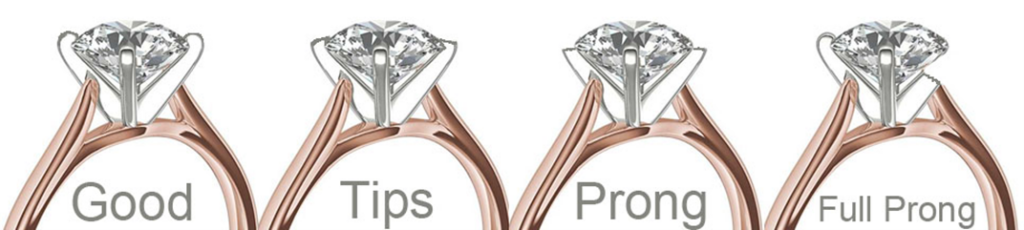
What Are Jewelry Prongs?
Prongs are small metal claws that extend from a ring, pendant, or earring setting to grip a gemstone securely.
Depending on the design, a stone may be held by:
- Four prongs
- Six prongs
- Eight or more prongs
- Double prongs
- Decorative claw prongs
- Rounded prongs
- V-prongs for pointed gemstones
- Micro prongs
Each style offers different levels of protection while complementing the overall design of the jewelry.
Although prongs appear solid, they are actually very small pieces of precious metal that endure years of daily stress.
What Causes Prongs to Wear Down?
Everyday life slowly removes tiny amounts of metal from prongs.
Common causes include:
- Wearing rings daily
- Gardening
- Lifting weights
- Working with tools
- Gripping steering wheels
- Household cleaning
- Typing and office work
- Accidental impacts
- Abrasion against hard surfaces
Every bump, scrape, and impact gradually changes the shape of the prongs.
Gold and platinum are durable precious metals, but neither is indestructible.
Signs Your Prongs Need Repair
Many worn prongs are difficult to detect without magnification, but there are warning signs you shouldn’t ignore.
Look for:
- Stones that wiggle or move
- A rattling sound when the jewelry is gently shaken
- Bent prongs
- Flattened prong tips
- Sharp or snagging prongs
- Missing prongs
- Cracked prongs
- Visible gaps between the prong and gemstone
- Stones that appear tilted
If you notice any of these issues, stop wearing the jewelry until it has been inspected.
Why Do Prongs Fail?
Prongs usually don’t fail overnight.
Instead, years of wear slowly remove metal until the prong becomes too thin to safely hold the gemstone.
Eventually, one of several things happens:
- The prong bends away from the stone.
- The prong snaps off.
- The tip wears completely away.
- The gemstone loosens.
- The stone falls out.
By the time a diamond is lost, the damage has often been developing for years.
What Happens During a Prong Inspection?
At Revolution Jewelry Works, every jewelry inspection begins under a jeweler’s microscope. Many problems that can’t be seen with the naked eye become immediately visible under magnification, allowing us to identify potential issues before they result in a lost stone or more extensive damage.
During every inspection, our jewelers carefully evaluate:
- Prong Thickness
Prongs naturally wear down over time through everyday use. We measure their thickness to determine whether they still have enough metal to securely hold your diamond or gemstone. Thin prongs are one of the leading causes of stone loss. - Metal Wear
We inspect the entire setting for signs of normal wear, including areas where precious metal has become thin from years of rubbing against hard surfaces. Excessive wear can weaken the jewelry and compromise its ability to safely hold gemstones. - Cracks
Tiny fractures can develop in prongs, channels, bezels, or other parts of the setting due to repeated impacts or metal fatigue. Even a small crack can eventually spread, causing part of the setting to fail if it isn’t repaired. - Loose Stones
Each gemstone is carefully checked to ensure it is seated securely. If a stone moves, rattles, or shifts within its setting, it may indicate worn prongs, damaged channels, or other structural issues that require attention. - Previous Repairs
Our jewelers examine any prior repair work to verify that it was completed properly and is still structurally sound. Older repairs may show signs of wear or may need to be reinforced to ensure the jewelry remains secure. - Overall Setting Integrity
We evaluate the condition of the entire setting—not just the area around a single stone. This includes checking that the mounting is strong, properly aligned, and capable of securely supporting every gemstone. - Channel Condition
For jewelry with channel-set stones, we inspect the channel walls for thinning, dents, uneven wear, and damage. Worn channels can allow gemstones to shift or fall out if they are not repaired. - Adjacent Stones
When one stone becomes loose or falls out, nearby stones may also be at risk. We inspect all surrounding diamonds and gemstones to ensure they remain secure and recommend tightening or repairs if needed. - Structural Damage
Finally, we inspect the entire piece for signs of bending, distortion, broken solder joints, weakened shanks, worn galleries, or other structural problems that could affect both the safety and longevity of your jewelry. Many issues that cannot be seen with the naked eye become obvious under magnification.
A thorough inspection allows us to identify small problems before they become expensive repairs. In many cases, addressing worn prongs, loose stones, or thinning metal early can prevent the loss of a valuable diamond or treasured gemstone and help your jewelry remain beautiful for generations.
What Is Prong Retipping?
When the base of a prong remains strong, but the tip has worn away, the jeweler may recommend prong retipping.
This process involves adding new precious metal to rebuild the top of the prong before reshaping and polishing it.
Retipping preserves much of the original setting while restoring the prong’s ability to securely hold the gemstone.
When Does a Prong Need Complete Replacement?
Sometimes a prong is too damaged for retipping.
Complete replacement may be necessary if:
- The prong has broken.
- The base is cracked.
- Metal fatigue has weakened the entire prong.
- Previous repairs have failed.
- Extensive wear has removed too much metal.
Replacing the entire prong restores the strength of the setting and provides long-term security.
Why We Often Recommend Repairing All the Prongs
Customers sometimes ask if only one damaged prong can be repaired.
While that is technically possible, jewelry often wears evenly.
If one prong has become dangerously thin, the remaining prongs are frequently close behind.
Repairing all worn prongs at the same time can help prevent future stone loss and reduce the need for repeated repairs.
Understanding Channel Settings
Not every gemstone is held by prongs.
Many wedding bands and anniversary rings feature channel settings, where gemstones sit between two continuous walls of precious metal.
Channel settings provide excellent protection because the stones are recessed below the metal edges.
However, channels also wear over time.
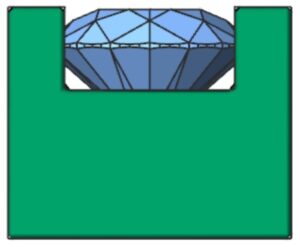 Characteristics of a Good Channel
A properly constructed channel setting should:
- Hold each stone securely without excessive pressure.
- Have even, straight channel walls.
- Maintain consistent width from end to end.
- Protect the girdle of every gemstone.
- Keep stones level and evenly spaced.
- Allow enough metal to resist years of wear.
- Show smooth, well-finished edges without sharp spots or gaps.
A well-built channel setting not only protects the gemstones but also distributes everyday wear more evenly across the mounting.
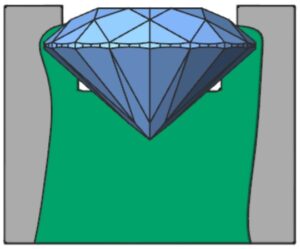 What Causes Channel Wear?
Like prongs, channel settings gradually wear from everyday use.
Contributing factors include:
- Years of daily wear
- Repeated impacts
- Abrasive surfaces
- Heavy manual labor
- Sports and recreational activities
- Thin original metal
- Poorly executed previous repairs
- Normal metal fatigue
As metal wears away, the channel walls become thinner and less capable of securely holding the gemstones.
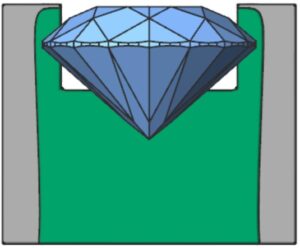 Outside Wear of Channels
One of the most common forms of channel damage occurs on the outside wall of the channel.
This side is frequently exposed to impacts against countertops, door frames, exercise equipment, steering wheels, and other hard surfaces.
As the outside wall becomes thinner, gemstones lose lateral support.
Signs of outside channel wear include:
- Rounded edges
- Thinning metal
- Small dents
- Loose stones
- Uneven channel height
- Visible wear patterns
If ignored, the weakened wall can eventually allow stones to shift or fall out.
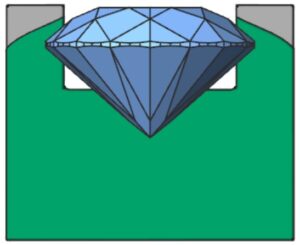 Topside Wear of Channels
The top edges of a channel experience constant friction from daily use.
Over time, the upper lip that secures the gemstones may gradually wear away.
When topside wear becomes significant, gemstones may begin to rise higher within the channel instead of remaining fully protected.
Warning signs include:
- Stones sitting higher than normal
- Flattened channel edges
- Loose gemstones
- Visible gaps
- Increased movement of the stones
- Uneven channel surfaces
Because this type of wear develops slowly, many owners don’t notice the problem until a stone is already loose.
How Channel Repairs Are Performed
Every repair depends on the condition of the setting.
Possible repairs include:
- Rebuilding worn channel walls
- Laser welding new metal
- Tightening loose stones
- Re-cutting stone seats
- Replacing worn sections
- Re-polishing and refinishing
The objective is always to restore both the appearance and structural integrity of the setting while preserving as much of the original jewelry as possible.
Why Professional Inspections Matter
Most jewelry damage develops gradually.
A quick inspection every six months can identify:
- Worn prongs
- Loose stones
- Channel wear
- Cracks
- Bent settings
- Thin metal
- Broken solder joints
Finding these issues early often prevents expensive repairs later.
How You Can Protect Your Jewelry
A few simple habits can significantly extend the life of your jewelry:
- Remove rings during heavy lifting, gardening, and home improvement projects.
- Avoid wearing jewelry while using tools or exercising.
- Store jewelry separately to prevent scratches.
- Clean your jewelry regularly to remove debris that can hide loose stones.
- Have your jewelry professionally inspected every six months.
- Address loose stones immediately before they become lost.
Preventive care is one of the most cost-effective ways to preserve your jewelry.
Trust Revolution Jewelry Works for Expert Prong and Channel Repairs
Your jewelry is designed to be worn and enjoyed, but even the finest craftsmanship requires maintenance over time. Worn prongs, damaged channels, and loose stones are common issues that can often be repaired before they result in the loss of a treasured diamond or gemstone.
At Revolution Jewelry Works, we combine advanced equipment, expert craftsmanship, and decades of experience to inspect, repair, and restore fine jewelry with precision and care. Whether your ring needs a simple prong retipping, a complete setting rebuild, or channel restoration, our skilled jewelers will recommend the solution that best protects your investment while preserving the beauty of your piece.
Because when it comes to fine jewelry, protecting the setting is just as important as protecting the stone.